By Tena Fernandez
The family is laughing. One child is not. Perhaps a sibling has hidden a school bag, an adult has repeated an embarrassing story, or rough play has continued after someone asked to stop. “We’re only joking,” someone says. The child goes quiet.
It is worth pausing there. What felt playful to one person may have felt frightening or humiliating to another. The question for parents is: what are our everyday interactions teaching children about respect, power and speaking up?
Children learn from many places, including friends, school and online spaces. A child using bullying behaviour does not prove that a parent caused it. Yet home gives us daily opportunities to model a different response, notice harm and help children practise respectful ways of relating.
What counts as bullying? Unwanted aggression, an imbalance of power, and repetition or the likelihood of repetition. A disagreement between children with similar power is different. Mutually enjoyable play is different too. Harmful sibling interactions still need attention, even before we decide what to call them.
Five things children pick up at home
- What they see modeled: Insults, mocking gestures or threats can give children examples they may repeat. We can model a repair: “I was frustrated, but that comment was disrespectful. Let me say it differently.”
- What receives approval: If a prank earns laughter while the child receiving it is distressed, the attention may encourage repetition. Pause the activity and check on the child: “I can see you’re upset. Let’s stop.”
- Pressure to belong: Children may join teasing to stay accepted. A younger child might repeat a nickname; a teenager might forward an embarrassing image. Practise a response such as “I’m not sharing that,” and discuss seeking adult help when speaking up feels unsafe.
- Intimidation that gets results: If threats repeatedly get someone a toy, attention or compliance, that strategy may continue. Set a clear limit and teach asking, negotiating and accepting “no.”
- Skills that still need support: Difficulty handling frustration or considering someone else’s feelings can contribute to harmful choices. Acknowledge the feeling, stop the harm and teach another response. Being upset does not make bullying inevitable.
When to look more closely
- The same child is repeatedly targeted
- Objections are ignored
- Threats or social influence are used to control
- Others are recruited to humiliate or exclude
- The harm is repeatedly dismissed
These are prompts for investigation, not a checklist that defines a child. Ask what happened, how often and whether the other child could safely object.
Check how your own words land
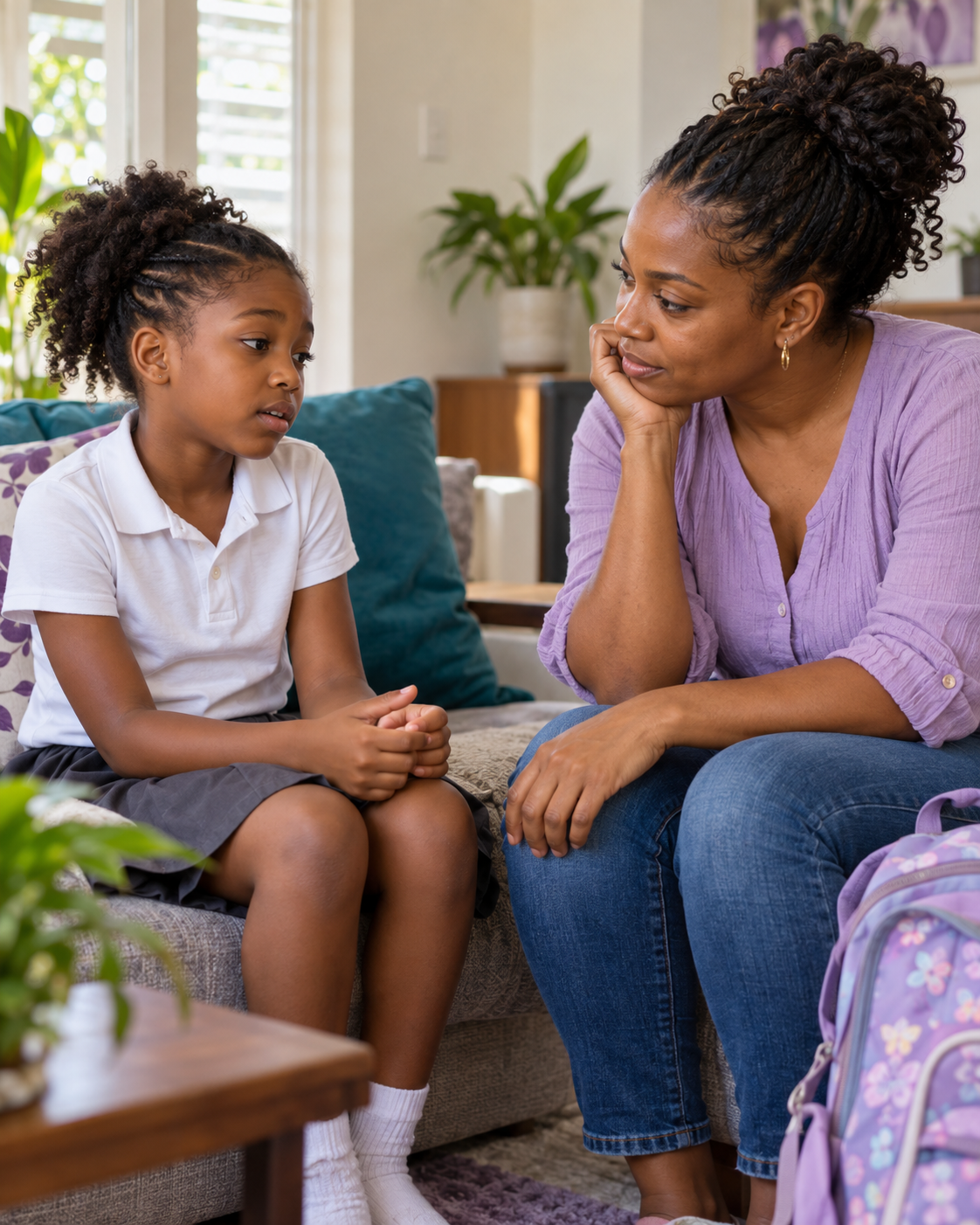
Parents can also check how our own communication is received. Notice if a child asks us to stop, becomes quiet, leaves, later describes embarrassment, or avoids sharing because personal stories become entertainment. These reactions do not prove what a child feels. They give us a reason to ask privately:
For a younger child“Was that fun, uncomfortable or something else?”
For a teenagerOffer space and a private conversation: “How did that feel for you?”
Listen before explaining your intention. If you caused hurt, apologise specifically and change the behaviour: “I hear that it embarrassed you. I’m sorry. I won’t use that joke again.”
If your child is being targeted
A child who freezes or stays quiet still deserves protection. Begin with “Thank you for telling me. You don’t deserve this.” Then help them:
- Move towards a safer place or supportive adult when possible.
- Practise saying “Stop” if safe.
- Tell a trusted adult.
- Seek another adult’s help if the first response does not protect them.
- Make a safety plan together and check whether it works.
Coordinate with the school where relevant and agree who will act and when you will review safety. Online incidents need adult help with reporting, blocking and safely keeping ordinary messages as evidence. Do not spread harmful content further.
What you can do at home
- Model respectful words, tone and gestures.
- Make “stop” meaningful during teasing and play.
- Listen to the impact before defending intention.
- Teach practical alternatives such as asking, taking a break and seeking help.
- Respond consistently, guide repair and check that the harmful behaviour has stopped.
If your child has harmed someone
Stop the behaviour and protect the child affected. Gather information and teach another response. Repair might involve replacing a damaged item or removing a hurtful post. The child affected cannot be required to forgive, meet or become friends. If the pattern persists, seek qualified support.
Choose one ordinary interaction to change. Pause before repeating an embarrassing story. Stop a game when someone wants out. Replace an insult with a respectful disagreement. At the end of the week, ask your child, “What helped you feel heard?”
The story at home can change through the small responses we practise.
“In our home, can someone say ‘That hurts’ and expect to be heard?”
This October, join me on Youtube @Inspired by Tena and Instagram @inspired_by_tena for short conversations about bullying and family communication.
Visit tenafernandez.com for parenting resources
Sources
- StopBullying.gov: What Is Bullying · Who Is at Risk
- StopBullying.gov: How to Prevent Bullying · What Kids Can Do
- StopBullying.gov: Report Cyberbullying